
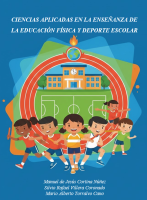
Ciencias aplicadas en la enseñanza de la educación física y deporte escolar
Keywords:
1. Ciencias aplicadas 2. Educación física 3. Deporte escolar 4. Enseñanza educativaSynopsis
Prólogo
La Educación Física y el deporte escolar han dejado de ser, hace mucho tiempo, meras pausas recreativas en la jornada académica para convertirse en pilares fundamentales del desarrollo humano integral. Sin embargo, el desafío actual no radica solo en "poner en movimiento" a los estudiantes, sino en comprender profundamente los mecanismos que rigen ese movimiento y cómo optimizarlos para favorecer la salud, el aprendizaje y el bienestar emocional.
Esta obra nace de una premisa clara: la enseñanza de la actividad física no puede ser ajena al rigor de las ciencias aplicadas. Desde la biomecánica que explica la eficiencia de un gesto técnico, hasta la neurociencia que nos revela cómo el ejercicio físico potencia la plasticidad cerebral y las funciones ejecutivas, la ciencia ofrece las herramientas necesarias para que el docente pase de la intuición a la evidencia.
A lo largo de estas páginas, el lector encontrará un recorrido interdisciplinar que aborda: La Fisiología del Ejercicio: Entendida como la base para adaptar las cargas de trabajo a las etapas de crecimiento y desarrollo. La Psicología Deportiva: Clave para fomentar la motivación intrínseca, la resiliencia y los valores de cooperación en el entorno escolar. La Pedagogía y Didáctica: Que se nutren de datos empíricos para diseñar situaciones de aprendizaje inclusivas y significativas.
El deporte escolar es, quizás, el laboratorio social más importante de la infancia y la adolescencia. Es allí donde se gestionan el éxito y el fracaso, donde se forja la identidad corporal y donde se asientan —o se pierden— los hábitos de vida saludable. Por ello, el profesional de la Educación Física tiene la responsabilidad ética de mantenerse a la vanguardia del conocimiento científico.
Este libro no es solo un compendio de teorías; es una invitación a la reflexión crítica. Su objetivo es dotar a entrenadores, docentes y estudiantes de Ciencias del Deporte de un marco sólido para transformar sus sesiones en experiencias educativas de alta calidad.
Al cerrar este prólogo, queda la invitación al lector: utilice estas páginas no como una receta inamovible, sino como un mapa. Un mapa que le permitirá navegar con seguridad en la noble tarea de educar a través del cuerpo, transformando la ciencia en acción y el esfuerzo en desarrollo vital.
¡Que el conocimiento sea el motor que impulse cada zancada en el patio de recreo!
Ph.D. Rafael Antonio Martínez González
Ph.D. Ciencias del Deporte
Chapters
-
CAPÍTULO 1 FUNDAMENTOS NEUROFISIOLÓGICOS Y MOTRICES EN LA ENSEÑANZA DE LA EDUCACIÓN FÍSICA
Downloads
References
Behm, D. G., Young, J. D., Whitten, J. H., Reid, J. C., Quigley, P. J., Low, J., & Lima, L. C. J. (2022). Foundations of strength training in children and adolescents: Key concepts and practical considerations. Sports Medicine, 52(8), 1693–1713. https://doi.org/10.1007/s40279-022-01694-9
Beunen, G., & Malina, R. M. (2008). Growth and biologic maturation: Relevance to athletic performance. In Hebestreit, H. & Bar-Or, O. (Eds.), The young athlete (pp. 3–17). Wiley-Blackwell. https://doi.org/10.1002/9780470694934.ch1
Faigenbaum, A. D., & Myer, G. D. (2020). Resistance training for children and adolescents: Benefits, risks, and recommendations. British Journal of Sports Medicine, 54(15), 933–941. https://doi.org/10.1136/bjsports-2019-101114
Lloyd, R. S., & Oliver, J. L. (2022). The youth physical development model: A new approach to long-term athletic development. Strength and Conditioning Journal, 44(2), 17–27. https://doi.org/10.1519/SSC.0000000000000664
Malina, R. M., Rogol, A. D., Cumming, S. P., Coelho E. Silva, M. J., & Figueiredo, A. J. (2022). Biological maturation of youth athletes: Assessment and implications. British Journal of Sports Medicine, 56(7), 396–403. https://doi.org/10.1136/bjsports-2020-102226
Behm, D. G., Young, J. D., Whitten, J. H., Reid, J. C., Quigley, P. J., Low, J., & Lima, L. C. J. (2022). Foundations of strength training in children and adolescents: Key concepts and practical considerations. Sports Medicine, 52(8), 1693–1713. https://doi.org/10.1007/s40279-022-01694-9
Enoka, R. M., & Duchateau, J. (2017). Rate coding and the control of muscle force. Cold Spring Harbor Perspectives in Medicine, 7(10), a029702. https://doi.org/10.1101/cshperspect.a029702
Faigenbaum, A. D., & Myer, G. D. (2020). Resistance training for children and adolescents: Benefits, risks, and recommendations. British Journal of Sports Medicine, 54(15), 933–941. https://doi.org/10.1136/bjsports-2019-101114
Granacher, U., Lesinski, M., Büsch, D., Muehlbauer, T., Prieske, O., Puta, C., … & Behm, D. G. (2016). Effects of resistance training in youth athletes on muscular fitness and athletic performance: A conceptual model for long-term athlete development. Frontiers in Physiology, 7, 164. https://doi.org/10.3389/fphys.2016.00164
Lloyd, R. S., & Oliver, J. L. (2022). The youth physical development model: A new approach to long-term athletic development. Strength and Conditioning Journal, 44(2), 17–27. https://doi.org/10.1519/SSC.0000000000000664
Malina, R. M., Rogol, A. D., Cumming, S. P., Coelho E. Silva, M. J., & Figueiredo, A. J. (2022). Biological maturation of youth athletes: Assessment and implications. British Journal of Sports Medicine, 56(7), 396–403. https://doi.org/10.1136/bjsports-2020-102226
Ayala, F., Croix, M. D. S., de Baranda, P. S., & Cejudo, A. (2019). Reproducibility and criterion-related validity of sit-and-reach tests in children aged 10–12 years. European Journal of Pediatrics, 178(1), 23–32. https://doi.org/10.1007/s00431-018-3244-6
Baca, A., & Kornfeind, P. (2021). Tactical analysis in sports using technology and data science. Sensors, 21(19), 6451. https://doi.org/10.3390/s21196451
Behm, D. G., Young, J. D., Whitten, J. H., Reid, J. C., Quigley, P. J., Low, J., & Lima, L. C. J. (2022). Foundations of strength training in children and adolescents: Key concepts and practical considerations. Sports Medicine, 52(8), 1693–1713. https://doi.org/10.1007/s40279-022-01694-9
Claudino, J. G., Capanema, D. O., de Souza, T. V., Serrão, J. C., Machado Pereira, A. C., Nassis, G. P., & Loturco, I. (2019). Current approaches to the use of artificial intelligence for injury risk assessment and performance prediction in team sports: A systematic review. Sports Medicine – Open, 5(1), 28. https://doi.org/10.1186/s40798-019-0202-3
Faigenbaum, A. D., & Myer, G. D. (2020). Resistance training for children and adolescents: Benefits, risks, and recommendations. British Journal of Sports Medicine, 54(15), 933–941. https://doi.org/10.1136/bjsports-2019-101114
Granacher, U., Lesinski, M., Büsch, D., Muehlbauer, T., Prieske, O., Puta, C., … & Behm, D. G. (2016). Effects of resistance training in youth athletes on muscular fitness and athletic performance: A conceptual model for long-term athlete development. Frontiers in Physiology, 7, 164. https://doi.org/10.3389/fphys.2016.00164
Kakinami, L., Hodge, A., Henderson, M., Barnett, T. A., & Paradis, G. (2021). Evaluation of bioelectrical impedance analysis for assessing body composition in children and adolescents: A systematic review. Pediatric Obesity, 16(7), e12761. https://doi.org/10.1111/ijpo.12761
Lloyd, R. S., & Oliver, J. L. (2022). The youth physical development model: A new approach to long-term athletic development. Strength and Conditioning Journal, 44(2), 17–27. https://doi.org/10.1519/SSC.0000000000000664
Pueyo, Á., Roldán, A., & González, F. (2022). Big data and education: A review of current research trends in physical education and sports sciences. Journal of Human Sport and Exercise, 17(4), 890–905. https://doi.org/10.14198/jhse.2022.174.09
Ramos-Ibáñez, N., Latorre-Román, P. Á., & Párraga-Montilla, J. A. (2022). Body composition assessment in children and adolescents: Validity of anthropometric equations using DXA as a reference method. Frontiers in Pediatrics, 10, 868154. https://doi.org/10.3389/fped.2022.868154
Tanner, R. K., & Chamberlain, S. (2023). Practical testing and monitoring in youth strength training: Updated recommendations. Journal of Strength and Conditioning Research, 37(1), 275–283. https://doi.org/10.1519/JSC.0000000000004413
Wind, A. E., Takken, T., & Helders, P. J. (2023). Grip strength as an indicator of general health in children and adolescents. Frontiers in Pediatrics, 11, 1104751. https://doi.org/10.3389/fped.2023.1104751
Downloads
Published
Series
Categories
License

This work is licensed under a Creative Commons Attribution-NonCommercial-ShareAlike 4.0 International License.